

How Often Do You Clean A Geldings Sheath
Some horse owners feel that it is necessary to 'clean' a colt or gelding'southward prepuce (sheath) and penis on a fairly regular basis. While this may seem an innocent attempt to keep their horse 'clean', sheath washing is usually unnecessary and can effect in the establishment of quite astringent bacterial infection that tin exist very difficult to resolve.
What is normal?
The penis and sheath accept a permanent population of normal bacteria on their surface, but as all skin surfaces practise. These bacteria practice not cause disease; they undoubtedly help maintain the wellness of the pare and may help forestall infection by controlling 'unwelcome' bacteria. The urethral fossa and sinus, in particular, tin harbor potential venereal affliction producing bacteria (specifically Klebsiella pneumoniae, Pseudomonas aeruginosa and Taylorella equigenitalis). Infection with these organisms tin can cause venereal disease in mares following mating but rarely cause signs or symptoms of affliction in the carrier stallion, who is usually infected past a carrier mare. When stallions go infected, these organisms may survive on the penile skin aslope of the 'normal' bacterial population and tin so be very difficult to remove.
What harm can sheath cleaning exercise?
Although sheath washing sounds like a skillful idea and has been recommended by horsemen universally over the years as an important routine equine management process, it can have a detrimental effect if the normal 'ecological' balance of skin bacteria is disturbed. Washing the penis and sheath with stiff detergent solutions can remove the natural peel oils, resulting in dry penile pare that cracks as information technology folds and unfolds, causing irritation and damage followed by inflammation and secondary infection. If this infection is caused by bacteria that are easy to treat, the trouble may resolve spontaneously once washing with detergent has stopped. Local (creams or ointments) or systemic (by injection or by mouth) antibiotic treatment may exist necessary.
Repeated washing with antiseptic, i.e., antibacterial washes or detergent solutions can result in amending or removal of the normal penile skin bacterial population. This may result in colonization by unwelcome bacteria that are not normally present, either from the stable environment or post-obit mating with a crabs disease carrier mare, and severe penile skin and sheath infections tin can outcome. The infection results in inflammation, swelling of local tissues and a profuse foul-smelling belch that is much more unpleasant than smegma.
These infections can be extremely difficult to treat due to the resistant nature of some unwelcome bacteria. In such cases, prolonged treatment with specific systemic and topical antibiotics may be necessary, followed past a menses of rest and and so the application of a specially-prepared 'normal' penile pare bacterial broth culture to re-colonize the area. In some cases even this handling may be unsuccessful and chronic infection may result in thickened croaky penile peel and extreme discomfort.
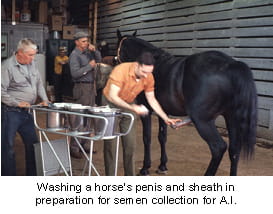
How should sheath cleaning be performed?

Source: https://vcahospitals.com/know-your-pet/sheath-cleaning-in-horses
Posted by: ottopairofterl.blogspot.com
0 Response to "How Often Do You Clean A Geldings Sheath"
Post a Comment